Hang-on-back (HOB)
Hangs on the rear glass, water flows over a cartridge or media basket. Easy to clean, good for 40–200 L tanks. AquaClear, Fluval C, Tetra Whisper. Ideal first filter — accessible, cheap to maintain.

🌊 Filters + pumps
The filter does 80% of the work of keeping fish alive — biological breakdown of ammonia, mechanical removal of debris, oxygen via water movement. The wrong size filter kills fish slowly via ammonia buildup. Here's the type, size + setup logic.
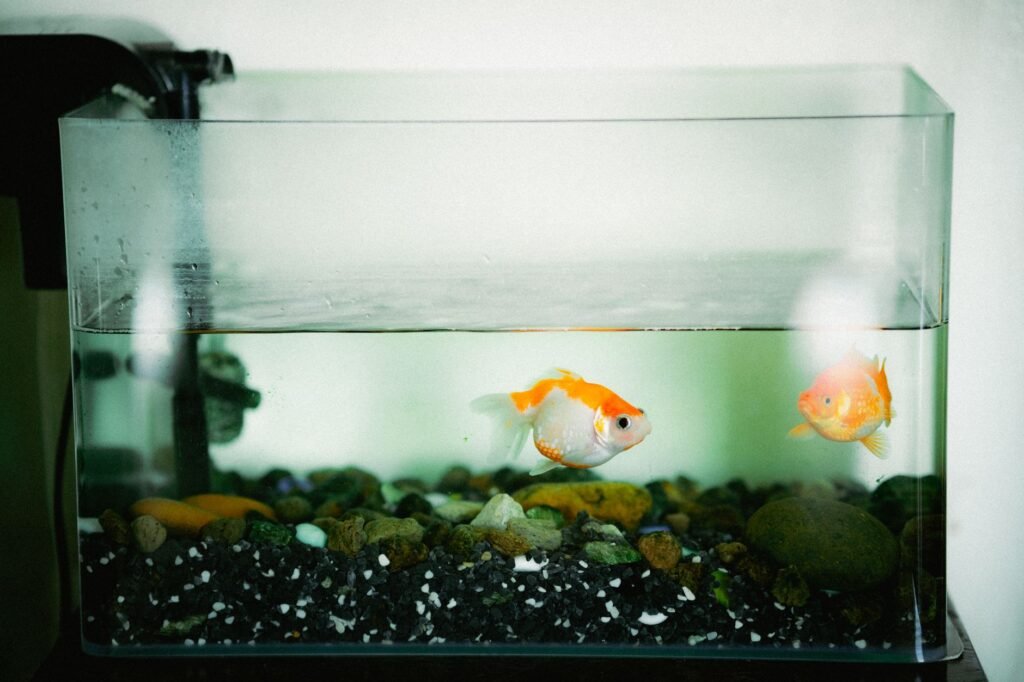
Photo: Thanh Nhan / Pexels
Hangs on the rear glass, water flows over a cartridge or media basket. Easy to clean, good for 40–200 L tanks. AquaClear, Fluval C, Tetra Whisper. Ideal first filter — accessible, cheap to maintain.
External cylinder under the tank. Big media volume = best biological filtration. Quiet, hidden, lots of flow control. Ideal for 200 L+, planted tanks, big bioloads. Eheim Classic, Fluval FX series, Oase. €100–€300 but worth it.
Cheap, brilliant for fry tanks, shrimp tanks, hospital tanks. Air pump pushes water through sponge. Low flow (good for shy fish), no fry-suction risk, biological media area. €5–€15. Every fishkeeper should have a spare.
Submerged box with media. Cheap, simple, takes up tank space. Standard in starter kits. Fine for small tanks (under 60 L), but media volume is small — outgrown fast. Upgrade to HOB or canister as tank stocking grows.
Not a filter, but pairs with sponge filters + adds oxygen. Essential in heavily-stocked tanks, breeding tanks, hot summer days when O₂ drops. Tetra APS, Eheim Air Pump are quiet (most cheap pumps buzz). Battery backups exist for power-cut insurance.
A 100 L tank needs a filter rated 400–600 L/h flow. Heavily stocked / messy fish (goldfish, cichlids): 8–10× turnover. Shy / slow-current fish (bettas, gouramis): 3–4×. Manufacturer ratings often optimistic — buy ONE size up.
New filter = no beneficial bacteria = ammonia spike kills fish. "Fishless cycle" with ammonia source for 4–6 weeks before stocking. Or "seed" with media from an established tank. Most "starter fish died" stories are uncycled-filter stories.
3 stages: mechanical (sponge / floss — catches debris), biological (ceramic rings / bio-balls — bacteria home), chemical (carbon — only for emergencies, removes meds + plant nutrients). Most filter capacity should be biological media.
Manufacturers sell "monthly cartridge replacements" because it's recurring revenue. DON'T do it — replacing all media wipes out the bacteria colony = mini-cycle = ammonia spike = fish die. Rinse media in OLD tank water (not tap — chlorine kills bacteria) every 2–4 weeks.
Weekly: glance at flow rate (slowing = clogged). Monthly: rinse mechanical media in tank water. Quarterly: clean impeller (limescale builds). Yearly: replace pre-filter sponge if degraded. Canister filters: open every 2–3 months.
Filter off 4+ hours = bacteria start dying from O₂ loss. When power returns: don't just plug back in — pour out + discard cloudy filter water (toxic ammonia released as bacteria die). Rinse media in tank water, restart, do partial water change. Long outages = battery backup pump.
Alleavia doesn't stock or ship pet supplies. Our breed-matched buying guides pick the right filters and pumps gear and link out to Amazon — and the calculators, breed guides and AI vet tools below are always free.
Heavily-planted "Walstad" tanks can balance without filters, but they're demanding to set up + low stocking. For 99% of home tanks: yes, you need a filter. Anything advertised as "filter-free goldfish bowl" is animal cruelty — don't buy.
Mechanical media (sponge, floss) — rinse in old tank water every 2–4 weeks. Biological media — leave alone for 6–12 months minimum. Chemical media (carbon) — replace monthly if used. NEVER replace all media at once: that wipes the bacteria + crashes the tank.
Three reasons: (1) clogged mechanical media — rinse it, (2) impeller fouled with mineral deposits — disassemble + scrub quarterly, (3) air leak in canister hoses — check seals + lubricate gaskets annually. Yearly impeller-replacement on canisters keeps flow at spec.
Most modern filters create enough surface agitation for oxygen exchange. Air pumps are useful: heavily-stocked tanks, hot weather (O₂ drops as temp rises), live food cultures, breeder tanks, redundancy during power-cuts. Not strictly required for most home setups.
Join 1,000+ Irish pet owners getting our weekly tips, food recall alerts and breed deep-dives. Unsubscribe in one click.
No thanks, I'll find my own way →
By subscribing you agree to our Privacy Policy. We never share your email.