Terrariums & Enclosures

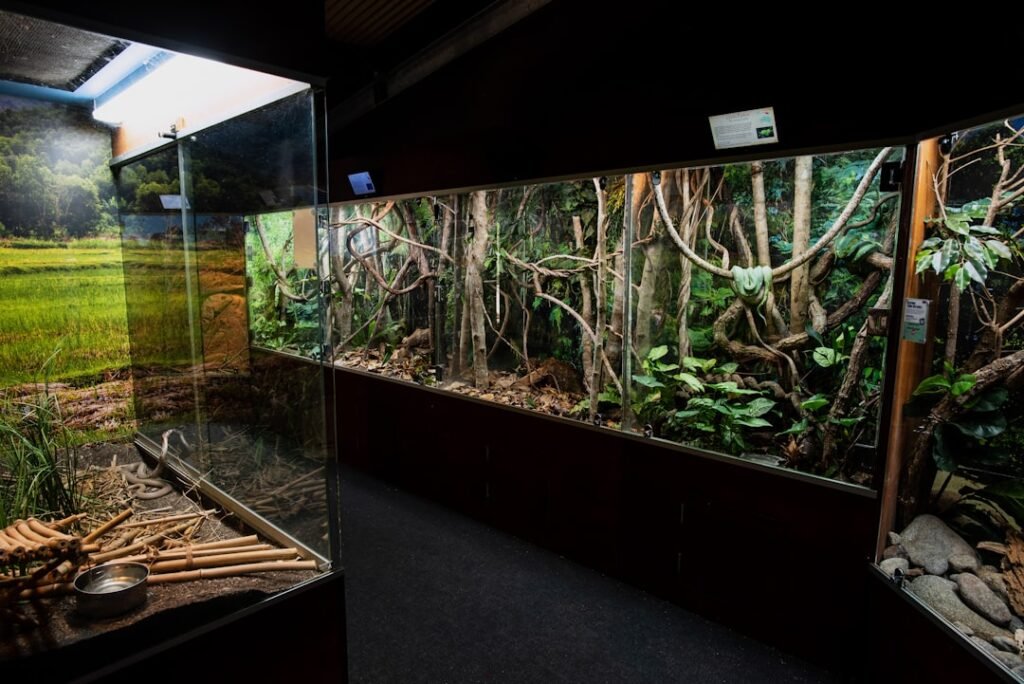
Give your reptiles a secure, well ventilated home with our terrariums and enclosures. Choose the size and style that fits your species and available space, with options designed for climbing, burrowing and aquatic setups. A solid habitat is the foundation of a healthy reptile.

🦎 Terrariums + enclosures

Reptile enclosures β€” bigger always, species-specific always

The pet shop will sell you a "starter terrarium" that's half the size your reptile needs as an adult. Don't buy it β€” you'll replace it within a year. Here's the right enclosure type for each common species, and the minimum sizes that actually let your reptile thrive.

What we'll be stocking

Types of enclosure β€” and which species each suits

Glass front-opening (Exo Terra style)

Level
Most species
Size
45Γ—45Γ—60 cm to 120Γ—60Γ—90 cm
Habitat
Glass; mesh top for ventilation

Best for: bearded dragons, leopard geckos, crested geckos, ball pythons (small). Front-opening reduces stress (no overhead grab). Good ventilation. Heat-loss is the trade-off β€” top mesh lets warmth escape; partial-cover with insulation in winter.

Wooden vivarium (Vivexotic style)

Level
Bigger reptiles
Size
120 cm+ wide
Habitat
Sealed wood; sliding glass front

Best for: adult bearded dragons, ball pythons, corn snakes, blue-tongue skinks. Holds heat far better than glass β€” easier to maintain hot/cool gradient. Sealed properly (cleaning + waterproofing) for years of use.

Mesh / screen cage

Level
Tropical / arboreal
Size
Tall, climbable
Habitat
Aluminium mesh; misting access

Best for: chameleons (need ventilation), some tree-dwelling species. Terrible for desert species (no humidity hold) and snakes (escape risk). Watch for nail damage on mesh + cold spots.

Outdoor enclosure / tortoise pen

Level
Tortoises
Size
10 mΒ² minimum, predator-proof
Habitat
Mixed substrate, hides, water dish

Best for: Hermann's tortoise + similar Mediterranean species in summer. Indoor enclosure for winter. Predator-proof from foxes and dogs. Drainage matters β€” Irish weather will rot a poorly designed pen.

Bioactive (live-plant + clean-up crew)

Level
Advanced setups
Size
Larger than minimum
Habitat
Live plants + isopods + springtails

A self-cleaning ecosystem. Brilliant for crested geckos, day geckos, dart frogs, small skinks. Higher upfront cost + plant knowledge needed, but lower long-term maintenance + happier animals. Not for desert species.

Sizing rules + non-negotiables

πŸ“

Buy adult-size, not "starter"

A juvenile bearded dragon happily lives in 60 cm; an adult needs 120 cm minimum. Buying small now means buying again in 8 months. Get adult-size from day one and decorate to keep it busy.

🌑️

Hot zone + cool zone β€” always

Every reptile needs a thermal gradient β€” basking warm end + retreat cool end. The longer the enclosure (length, not height), the better the gradient. Square cubes are bad for thermoregulation.

πŸ”Œ

Always a thermostat on the heat source

Never wire a heat lamp or mat directly to the wall. Pulse-proportional (digital) thermostats for ceramic + bulb heaters; on/off (mat) thermostats for under-tank heaters. Fire risk + burns are real without one.

β˜€οΈ

UVB for diurnal species β€” high-output T5

Bearded dragons, tortoises and similar diurnal reptiles must have a high-output T5 UVB tube (Arcadia 12% / Reptisun 10.0). Tube length covers 2/3 of enclosure length. Replace every 12 months β€” output decays before the bulb fails.

πŸ”’

Escape-proof β€” every gap

Snakes test every gap; lizards climb cables; tortoises dig under fences. Check enclosure seams, mesh tops, ventilation slots. Use Velcro or locks on doors. A "lost" reptile in an Irish house often dies from cold within 24 hours.

πŸ“¦ We're stocking up

Our terrariums & enclosures range goes live as we vet suppliers β€” we won't list anything we wouldn't use ourselves. In the meantime, our calculators, breed guides and AI vet tools below are free and don't need stock.

Frequently asked questions

Glass vs wood β€” which is better?

Wood holds heat better and is easier to gradient β€” preferred for desert/temperate species and most adult reptiles. Glass shows the animal off + has full visibility β€” preferred for crested geckos, dart frogs and display tanks. For most beginners with a bearded dragon or ball python: a sealed wood vivarium beats glass on temperature stability.

Can I put two reptiles in the same enclosure?

Almost always no. Most beginner species (leopard geckos, bearded dragons, ball pythons, crested geckos) are solitary in the wild β€” cohabitation causes stress, food competition, injuries, and breeding stress even between same-sex pairs. The classic exception (adult female leopard geckos in a very large enclosure) often goes wrong. Default: one reptile per enclosure.

Are mesh tops OK for snakes?

Risky β€” snakes burn themselves on heat lamps placed directly on mesh, and tongue/face injuries from rubbing on mesh are common. Use a guarded heat source + smooth glass or wood top where possible. If your enclosure has a mesh top, cover 1/3 with foil/insulation to retain heat and prevent burns.

How much does a proper enclosure cost in Ireland?

Realistic 2026 budget: €120–€200 for a small adult-size glass terrarium (45Γ—45Γ—60 cm), €250–€450 for a 120 cm wood vivarium, €600+ for premium custom-built setups. Add €100–€200 for thermostat + UVB + heat source + thermometer + substrate. Total starter kit for a bearded dragon: €450–€700 done properly.

Cookie settings