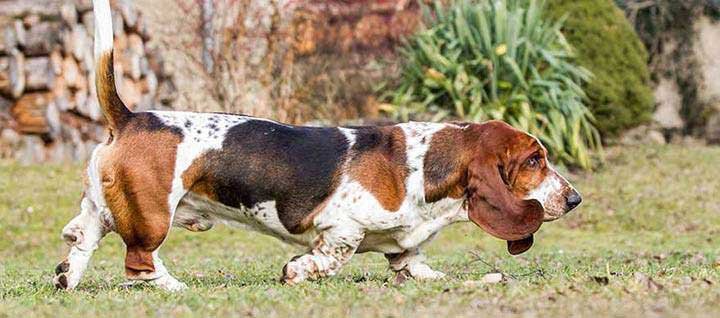
Basset Hound vs Cocker Spaniel

Side-by-side comparison of two popular breeds — temperament, exercise, grooming, lifespan and common health issues. Use it to decide which breed fits your home.

Basset Hound vs Cocker Spaniel — at a glance

The Basset Hound (20–29 kg, 12–13 years) and the Cocker Spaniel (12–15 kg, 12–15 years) sit in different — or sometimes overlapping — corners of dog ownership. Here's how they really compare for an everyday Irish or UK family.

Cocker Spaniel is the significantly higher-energy dog of the two. If you can't commit to 60+ minutes of active exercise daily plus mental stimulation, the Basset Hound is the lower-friction choice.

On trainability, the Cocker Spaniel is markedly easier to train — picks up cues fast, stays focused. The Basset Hound is more independent and rewards patience over volume.

Both have manageable grooming routines — the Cocker Spaniel demands slightly more, but neither needs daily fuss.

Insurance premiums for breeds with brachycephalic, joint or cancer predispositions run 20–40% above average — check before you commit. We have a free quote calculator here.

Basset Hound Basset Hound Cocker Spaniel Cocker Spaniel

Group Hound Sporting
Origin France United Kingdom
Weight 20–29 kg 12–15 kg
Height 33–38 cm 36–43 cm
Lifespan 12–13 years 12–15 years
Energy level
Trainability
Grooming needs
Good with kids
Good with other pets
Hypoallergenic
Watchdog instinct
Novice-owner OK

Basset Hound Basset Hound

Temperament

Easy-going, friendly, stubborn, vocal. Bassets are gentle with children and tolerant of other pets. Famously hard to train without food motivation.

Exercise

45–60 minutes of daily moderate walking. They're slow but have stamina.

Grooming

Short coat, brush weekly. Long ears need weekly cleaning. Wrinkles need weekly wipe. Drooling is significant.

Health

Intervertebral disc disease (long backs). Bloat / GDV. Ear infections (long, low ears). Glaucoma. Obesity (food-driven).

Full Basset Hound profile →

Cocker Spaniel Cocker Spaniel

Temperament

Cheerful, gentle, eager-to-please, devoted. Cockers can be sensitive — harsh training shuts them down. They're very people-oriented and dislike being alone. "Rage syndrome" was historically a problem in some lines (especially solid red); modern responsible breeding has largely eliminated it.

Exercise

60–90 minutes of daily exercise plus mental work. Scent work is ideal. Off-lead in safe areas — Cockers love to retrieve.

Grooming

Medium-long coat with heavy ear and leg feathering. Brush 3× weekly; ears need cleaning weekly (long, hairy ears = infection risk). Most pet owners get a "puppy clip" every 6–8 weeks.

Health

Ear infections (very common). Eye conditions (cataracts, glaucoma, PRA). Hip dysplasia. Autoimmune haemolytic anaemia in some lines. Generally a robust breed otherwise.

Full Cocker Spaniel profile →

Which is right for you?

Pick the Basset Hound if

Calm families with children, multi-dog homes, suburban houses.

Pick the Cocker Spaniel if

Active families with children, multi-pet homes, country / suburban owners.

Free DeliveryOn orders over $100
Secure CheckoutStripe & Apple Pay
Easy Returns14-day return window
Real Human SupportMon–Fri 7am–10pm
Cookie settings