Birman vs Maine Coon

Side-by-side comparison of two popular breeds — temperament, exercise, grooming, lifespan and common health issues. Use it to decide which breed fits your home.

Birman vs Maine Coon — at a glance

The Birman (3–6 kg, 13–16 years) and the Maine Coon (4–9 kg, 12–15 years) sit in different — or sometimes overlapping — corners of dog ownership. Here's how they really compare for an everyday Irish or UK family.

Both breeds have similar energy demands — Maine Coon tips slightly higher but neither is a couch dog.

Both have manageable grooming routines — the Maine Coon demands slightly more, but neither needs daily fuss.

Insurance premiums for breeds with brachycephalic, joint or cancer predispositions run 20–40% above average — check before you commit. We have a free quote calculator here.

Birman Birman Maine Coon Maine Coon

Group Long Hair Long Hair
Origin Burma (legendary), France United States (Maine)
Weight 3–6 kg 4–9 kg
Height 20–25 cm 25–40 cm
Lifespan 13–16 years 12–15 years
Energy level
Trainability
Grooming needs
Good with kids
Good with other pets
Hypoallergenic
Watchdog instinct
Novice-owner OK

Birman Birman

Temperament

Gentle, friendly, devoted, quiet. Birmans bond closely with everyone in the household, are excellent with children and other pets, and tend to be lap cats.

Exercise

Moderate play needs. Indoor-only suits them.

Grooming

Semi-long coat that mats less than Persians. Brush 2–3× weekly. Bathe occasionally.

Health

Hypertrophic cardiomyopathy (HCM). Polycystic kidney disease. Spongiform degeneration in some lines. Generally a long-lived breed.

Full Birman profile →

Maine Coon Maine Coon

Temperament

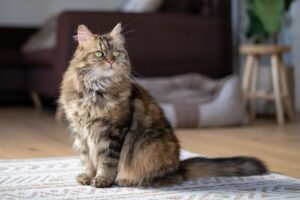
Friendly, curious, sociable, vocal (chirps and trills more than meows). Maine Coons love their family, get on with other pets, and are unusually playful and trainable for cats.

Exercise

Active and play-driven. Provide tall cat trees (they climb), interactive toys, and play sessions twice daily. Many enjoy walks on a harness.

Grooming

Long, silky double coat — surprisingly low-mat for the length. Brush 2–3× weekly; daily during seasonal moults. Check ear tufts and trim claws regularly.

Health

Hypertrophic cardiomyopathy (HCM — most common feline heart disease; DNA test available). Hip dysplasia (rare in cats but documented in Maine Coons). Spinal muscular atrophy (DNA test). Polycystic kidney disease. Buy from breeders who screen.

Full Maine Coon profile →

Which is right for you?

Pick the Birman if

Families with children, multi-pet homes, first-time owners, indoor households.

Pick the Maine Coon if

Families with children, multi-pet homes, first-time cat owners, anyone wanting a "dog-like" cat.

Free DeliveryOn orders over $100
Secure CheckoutStripe & Apple Pay
Easy Returns14-day return window
Real Human SupportMon–Fri 7am–10pm
Cookie settings