Pet Pro launch: 30% off first payment with code LAUNCH30 · 3 days left Claim 30% off →

Norwegian Elkhound vs Siberian Husky

Side-by-side comparison of two popular breeds — temperament, exercise, grooming, lifespan and common health issues. Use it to decide which breed fits your home.

Norwegian Elkhound vs Siberian Husky — at a glance

The Norwegian Elkhound (20–25 kg, 12–15 years) and the Siberian Husky (16–27 kg, 12–14 years) sit in different — or sometimes overlapping — corners of dog ownership. Here's how they really compare for an everyday Irish or UK family.

Both breeds have similar energy demands — Siberian Husky tips slightly higher but neither is a couch dog.

For a first-time owner, the Norwegian Elkhound is much more forgiving than the Siberian Husky.

Insurance premiums for breeds with brachycephalic, joint or cancer predispositions run 20–40% above average — check before you commit. We have a free quote calculator here.

Norwegian Elkhound Siberian Husky
Group Hound Working
Origin Norway Siberia
Weight 20–25 kg 16–27 kg
Height 46–53 cm 51–60 cm
Lifespan 12–15 years 12–14 years
Energy level
Trainability
Grooming needs
Good with kids
Good with other pets
Hypoallergenic
Watchdog instinct
Novice-owner OK

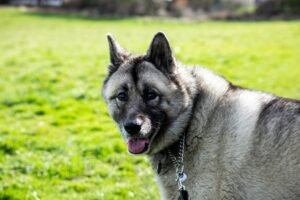
Norwegian Elkhound

Temperament

Confident, friendly, loyal. Vocal — they were bred to bark to alert hunters. Good with children, suspicious of strangers.

Exercise

60+ minutes daily. Built for cold-weather endurance.

Grooming

Thick grey double coat sheds heavily 2× per year. Brush 2–3× weekly, daily during moult.

Health

Generally hardy + long-lived. Watch for: hip dysplasia, progressive retinal atrophy, Fanconi syndrome.

Full Norwegian Elkhound profile →

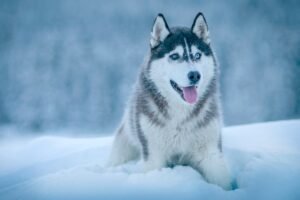
Siberian Husky

Temperament

Friendly, outgoing, mischievous. Huskies aren't protective and make terrible guard dogs (they greet thieves like family). They're famously vocal — howling, "talking", whining — but rarely bark. Independent, not eager to please.

Exercise

120+ minutes of vigorous daily exercise — running, scootering, bikejor, sled-style work. Huskies were bred to pull a sled all day; they cannot be exercised enough by walking. Never trust a Husky off-lead in an unfenced area — recall is famously unreliable.

Grooming

Heavy double coat. Brush 2–3× weekly, daily during the two annual coat blow seasons (when they shed enormously). Self-cleaning coat — bathe only every 8–12 weeks. Never shave a Husky — the coat insulates against heat and cold.

Health

Generally robust. Watch for: hip dysplasia, eye disorders (cataracts, PRA, juvenile cataracts), zinc-responsive dermatosis, hypothyroidism. Lifespan averages 12–14 years.

Full Siberian Husky profile →

Which is right for you?

Pick the Norwegian Elkhound if

Active families in cooler climates, allergy-tolerant homes, those wanting an old-soul breed.

Pick the Siberian Husky if

Experienced active owners, runners and bikers, multi-husky homes, secure-yard properties in cooler climates.

Free DeliveryOn orders over $100
Secure CheckoutStripe & Apple Pay
Easy Returns14-day return window
Real Human SupportMon–Fri 7am–10pm
Cookie settings