 Best Food for Labradoodle (2026 Guide)
A breed-specific food guide for Labradoodle owners — what to look for, what to avoid, and our top picks based on this breed's size, energy and known health profile.
Photo: Mia Anderson / Unsplash
The Labradoodle is lab × poodle cross. friendly, athletic, often (but not always) low-shedding. Their nutritional needs reflect their 15–30 kg body weight, 12–14 years lifespan, and the breed-specific health considerations covered below.
Why feeding a Labradoodle is different
The Labradoodle is genetically vulnerable to hip + elbow issues. Your single biggest dietary lever to protect those joints is keeping them lean — every extra kilo of body weight increases joint load by 3–4× during walking. Diet matters here far more than supplements.
With an active Labradoodle, calories go up — a working/sporting-line dog can need 30–50% more daily calories than a sedentary one of the same weight. Adjust for actual exercise, not the breed average.
Allergies are documented in this breed. If you see itchy paws, ear infections or chronic GI upset, a 12-week elimination trial with a single-protein limited-ingredient diet is the diagnostic gold standard. Avoid "hypoallergenic" marketing — look for novel protein (duck, fish, kangaroo).
The Labradoodle's coat needs omega-3 + omega-6 in roughly a 5:1 ratio for skin + coat condition. Fish-oil supplementation or a salmon-first food are the cheapest ways to get this right.
Below: a specific list of what to look for, what to avoid, plus our daily-calorie estimate for an average Labradoodle.
What to look for in food for a Labradoodle
- A complete-and-balanced food labelled for dogs that meets FEDIAF or AAFCO nutritional standards.
- Named animal protein as the first ingredient (e.g. "chicken", "salmon"), not "meat derivatives" or "animal by-product".
- Added glucosamine and chondroitin for joint support — especially important from puppyhood.
- A limited-ingredient diet with a single novel protein (duck, salmon, lamb) and limited carbs.
- A working / sport formula with higher protein (28%+) and fat (15%+) for sustained energy.
What to avoid
- Foods with vague labels like "meat", "cereal" or "by-product" — common allergens hide in there.
- Anything containing onion, garlic, raisins, xylitol or chocolate flavouring (common kitchen toxins for pets).
For an exact daily portion based on your dog's weight and activity, use our food portion calculator. To check current weight is healthy, use the body condition score.
Feeding a Labradoodle: common questions
How much should I feed a Labradoodle?
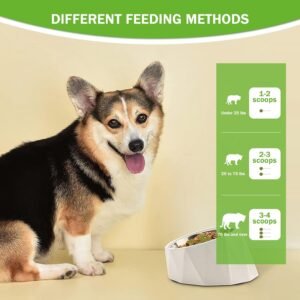
A Labradoodle typically weighs 15–30 kg, but the right daily amount depends on age, exact weight and activity — not the breed average. Start from the feeding guide on your chosen food (or our food portion calculator), weigh the portion rather than eyeballing it, and adjust to keep your dog lean enough that you can easily feel the ribs.
How many meals a day should a Labradoodle have?
Two meals a day suits an adult Labradoodle; puppies need three to four smaller meals until around six months, then settle to two.
Do Labradoodles need a special diet for their joints?
The biggest dietary lever for a joint-prone breed like the Labradoodle is keeping them lean — every extra kilo multiplies the load on the hips and elbows. A complete food with added omega-3s (or a fish-oil top-up) supports the joints; ask your vet about glucosamine.
Our top food picks for Labradoodles





Related buying guides
📧 Email me this for later
We'll send you a link to this best food guide for labradoodle page so you can come back any time.
More buying guides for Labradoodle
Health overview — Labradoodle
Hip and elbow dysplasia. Eye conditions. Ear infections. Allergies. Addison's disease (Poodle inheritance).